Marked differences in how people behave when listening to music and podcasts have been shown as a result of a major new study into the attention economy, from Acast and Differentology.
As far as media and advertising are concerned, the attention economy is the fight for consumer awareness, and efficient ways of marketing for product recall. Many are talking about it, but few are quantifying it.
Acast and market research company Differentology set about doing that by trying to demonstrate the value of podcasts and show that podcast advertising is more effective than other audio channels like radio and music streaming.
The results show the power that podcasts have to connect audiences, deliver messaging and keep people listening.
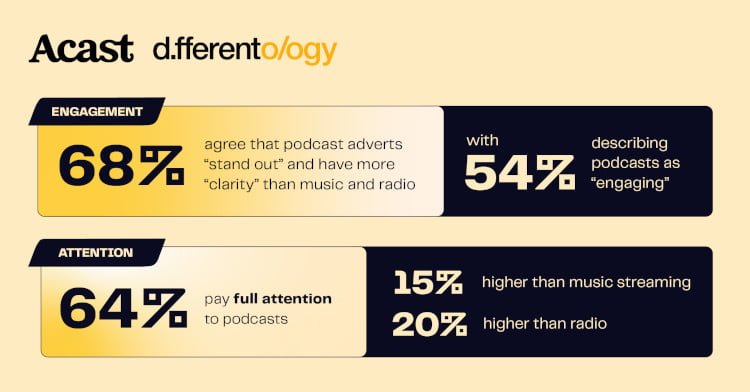
When it comes to absolute, undivided attention, 64% of respondents pay full attention to podcasts – compared to 49% of music streamers and 44% of radio listeners. This, they say, shows evidence for podcasts’ ability to encourage connection and engagement.
With recalling information, the research shows podcasts leading the way again. For example, when asked nine questions about the ads they’d been played, 35% of respondents were able to recall and correctly answer at least three questions for host-read podcast advertising, and 36% paid attention to the generic podcast advertising (dynamic adverts) – a nine-point percentage increase over the average. In contrast, those answering radio questions correctly were three percentage points below the average.
More than two thirds (68%) agree that podcast adverts “stand out” over and have more “clarity” than music and radio, while 54% describe podcasts as “engaging”.
The research also shows that podcast ads promote affinity, with 52% agreeing that host-read adverts are for “people like me” — but only a third (33%) feeling affinity for music streaming ads.
Acast says the research demonstrates contextual evidence of engagement with podcasts, but also shows why having better ads designed specifically for podcasts is equally important.