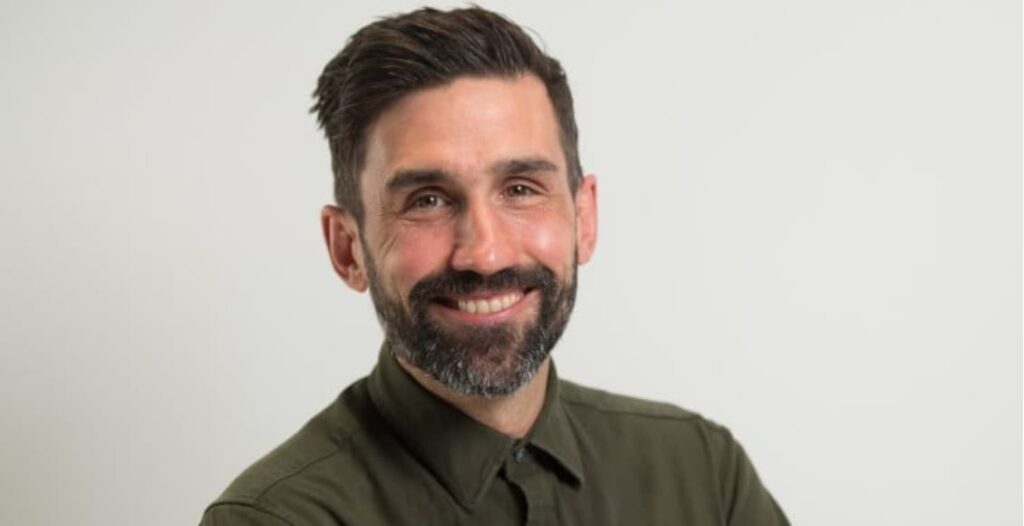
Sport Social’s Jim Salveson says podcasting could help sports reach young fans if social media restrictions expand.
Any new restrictions on social media access for under-16s could force sports organisations to rethink how they reach and engage the next generation of fans, according to Sport Social Podcast Network’s Director of Sport, Jim Salveson.
Writing about the potential impact of proposed changes, Salveson argues that sport has become heavily reliant on social media over the past decade to introduce young people to teams, athletes and competitions.
“For the last decade, sports rights holders have largely followed the same youth engagement playbook,” he says. “Create short-form content, distribute it through social platforms and convert attention into fandom.”
If younger audiences lose access to those platforms, Salveson believes sports organisations will face a significant challenge in maintaining visibility and building long-term connections with future supporters.
He points out that highlights, behind-the-scenes content and creator-led storytelling have all helped introduce sports to younger audiences, raising an important question for rights holders.
“How does sport continue to build visibility, affinity and long-term fandom among the next generation?” he asks.
Despite the concerns, Salveson sees a potential benefit in reduced social media use. He suggests that spending less time on screens could encourage more young people to take part in sport themselves.
“There is an upside worth acknowledging,” he says. “Less screen time could mean more time playing sport.”
According to Salveson, increased participation could strengthen grassroots sport while also creating future supporters.
“The relationship between playing and following a sport is well established,” he says. “People who take part tend to stick around as fans.”
However, he stresses that participation alone is not enough.
“Even with that grassroots growth, visibility still matters. Affinity does not just appear. It is built through stories, personalities and repeated exposure.”
Rather than asking whether podcasting can replace social media, Salveson believes the discussion should focus on whether sport needs a broader mix of channels.
“The real question isn’t whether podcasting replaces social media. It’s whether sport needs a broader mix of channels to build fandom in a post-social-first world.”
He acknowledges that podcasting cannot offer the same scale or instant discoverability as social media platforms but argues it provides something increasingly valuable.
“Podcasting is not a direct replacement for social media. It doesn’t offer the same scale, speed or discoverability. But it does offer something increasingly valuable: sustained attention.”
Salveson highlights growing evidence that younger audiences are already embracing audio content. Citing industry research, he notes that children’s podcast listening continues to rise and that almost half of children aged three to 12 in the United States now listen to podcasts every week.
“That starts to look a lot like the early days of YouTube adoption, just without the screen,” he says.
He also believes podcasting offers a significant commercial opportunity for sports organisations and advertisers.
Research cited in the article found that 82% of children’s podcast listening takes place alongside a parent, creating a rare opportunity to reach multiple generations simultaneously.
“When children and parents listen together, brands are not simply reaching a younger audience. They are reaching family decision-makers at the same time.”
Salveson argues that audio aligns naturally with the qualities that have always helped sport attract younger fans.
“Strip it back and the playbook has always been about authentic connection and immersive experiences. Audio does both if you use it properly.”
He suggests sport already possesses the ingredients needed to create compelling audio content, including athlete origin stories, behind-the-scenes access, fictionalised storytelling and simple explainers that make complex sports easier to understand.
“Think about what kids actually want. Stories. Characters. Entertainment first, information second.”
One of the biggest opportunities, he says, is the lack of sports podcasts aimed directly at children.
“There are podcasts about youth sport aimed at adults, sport talks constantly about creating the next generation of fans, yet there are remarkably few sports podcasts built specifically for children.”
Most existing youth sport content, he argues, focuses on parents, coaches and participants rather than entertaining young listeners themselves.
“For rights holders looking for genuine white space, opportunities this obvious are rare.”
To make podcasting work for younger audiences, Salveson believes sports organisations need a different content strategy, featuring shorter episodes, recurring characters, interactive elements and links to participation programmes.
He also notes that audio content can be consumed across multiple platforms, including smart speakers, in-car listening and mobile devices.
While he does not see podcasting replacing social media, he believes it can create something many social platforms struggle to achieve.
“It can offer something social platforms often struggle to create: deeper relationships built through habit, storytelling and regular engagement.”
Salveson concludes that while any social media restrictions may be disruptive, they could also create an opportunity for innovation.
“The social media ban may force a reset. That is uncomfortable, but it is also where interesting things tend to happen.”
He believes rights holders are uniquely positioned to take advantage of the opportunity.
“They have the access, content and resource to service a niche that is only going to grow as a result of these new laws.”
For sports organisations willing to experiment, Salveson says podcasting could become an increasingly important tool for building relationships with future fans.
“Audio will not solve everything, but for those willing to experiment, it may become a valuable piece of the puzzle in reaching the next generation of sports fans,” he concludes.