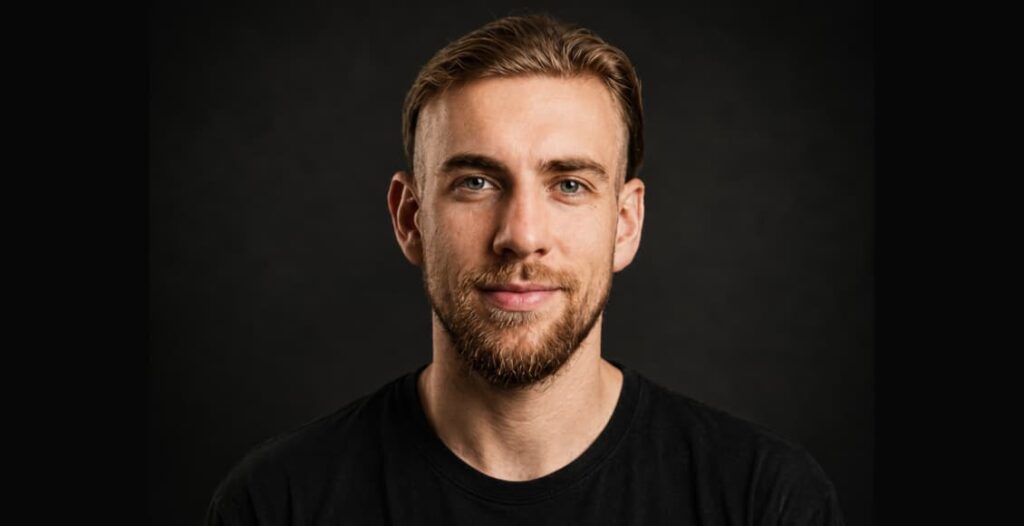
Produced By podcast host Tomas Loucky writes on how podcasting changed his online judgments and why audience size doesn’t always reflect conversation value.
After conversations with founders, creators and podcasters, I’ve learned that the people with the biggest audiences aren’t always the ones who leave the biggest impression.
When We Judge Before We Listen
The internet has made it easier than ever to discover popular people.
I’m not convinced it’s made us better at discovering interesting ones.
Imagine you’re looking for the next guest for your podcast.
You find two people.
One has 500,000 followers.
The other has 500.
Who do you invite?
Most of us instinctively choose the first.
It’s an understandable decision. Followers, downloads, subscribers and views have become the internet’s version of social proof. They help us navigate an overwhelming amount of content and make quick decisions about who deserves our attention.
The problem is that they also shape our expectations.
Before we’ve listened to someone, read their work or spoken to them, we’ve already formed an opinion.
When I started Produced By, I probably judged potential guests the same way many people do.
A bigger audience felt like a bigger opportunity.
After spending hours talking to founders, creators and entrepreneurs, I’m no longer convinced.
Some of the guests who’ve left the biggest impression on me weren’t the ones with the largest audiences. They were the people with the most thoughtful ideas, the greatest curiosity and the stories that stayed with me long after we stopped recording.
That’s when I realised something.
The internet has become incredibly good at measuring visibility.
But visibility and value aren’t always the same thing.
Audience size is an excellent way to measure visibility.
It’s a surprisingly poor way to measure how interesting someone really is.
That realisation made me think more carefully about why we rely on numbers in the first place.
The Numbers Trap
It’s easy to understand why we rely on numbers.
Platforms are built around them.
Whether you’re browsing LinkedIn, Spotify, YouTube or Instagram, the first thing you often notice isn’t someone’s work. It’s the number beside their name.
Followers.
Subscribers.
Downloads.
Views.
Before we’ve explored what someone has created, we’ve already formed an opinion.
That’s human nature.
Numbers simplify decisions. They reduce uncertainty. They help us choose who to follow, who to invite and who to trust.
The problem isn’t the numbers themselves.
The problem is what we assume they represent.
A large audience can absolutely reflect years of consistency, valuable work and genuine trust. It can also reflect timing, strong distribution, excellent marketing, being an early adopter or simply understanding how a platform works.
Those are valuable skills.
But they aren’t the same as insight.
They don’t automatically tell us who has the best story, the most interesting perspective or the ability to change the way we think.
Numbers help us discover people.
They don’t always tell us who is worth discovering.
What Podcasting Changed
Podcasting has changed the way I judge people online.
Not because it taught me how to grow an audience.
Because it taught me how little audience size tells you about the person behind it.
One experience has stayed with me more than any follower count ever could.
One of my guests had a relatively small audience. Before we even recorded, I noticed something I’d rarely experienced before. Their community was genuinely excited. People weren’t just liking the announcement. They were commenting, sharing it, tagging friends and saying they couldn’t wait to listen.
When the episode went live, that enthusiasm continued. People reached out with thoughtful feedback, recommended it to others and kept the conversation going. The guest also took the time to follow up afterwards. It felt like a genuine community rather than simply an audience.
I’ve experienced the opposite too.
Some guests with significantly larger audiences recorded great conversations, but once we finished, that was largely the end of it. There was little interaction afterwards and, in some cases, the episode wasn’t even shared with their audience.
Neither experience was right or wrong.
But it reminded me that audience size and audience connection are two very different things.
A loyal community of a few thousand people can create a far greater impact than an audience hundreds of times larger.
That’s one of the biggest lessons podcasting has taught me.
Social media lets us see someone’s highlights.
Podcasting lets us see who they really are.
Spend an hour talking to someone and what matters isn’t their follower count. It’s how they think, what they’ve experienced and whether they leave you seeing something differently.
That’s something no follower count can tell you before you press record.
A Better Question
The longer I’ve spent podcasting, the more I’ve realised I was asking the wrong question.
Instead of wondering how many followers someone has, I’ve become far more interested in what they have to say.
That shift has changed who I invite onto the podcast, whose work I pay attention to and, ultimately, who leaves the biggest impression.
What have they built?
What have they learned?
What mistakes changed the way they think?
What perspective could they share that my audience hasn’t already heard a hundred times?
Those questions have led me to some of the most rewarding conversations I’ve had.
They’ve also reminded me that expertise and visibility don’t always grow at the same pace.
Some people become well known because they’re excellent at building an audience.
Others become exceptional because they’re excellent at building businesses, solving problems or helping people.
Sometimes those two overlap.
Sometimes they don’t.
As podcast hosts, we have a unique opportunity.
We don’t have to let algorithms decide who deserves our attention.
We can choose curiosity instead.
We can introduce our listeners to people whose ideas matter, even if their audience is still small.
In many ways, that’s one of podcasting’s greatest strengths.
It rewards depth over speed.
Conversation over performance.
Ideas over impressions.
Looking Beyond the Numbers
Audience size will always matter.
It helps ideas spread.
It opens doors.
It creates opportunities.
Building an engaged audience takes years of consistency, creativity and trust, and that deserves recognition.
But it shouldn’t become the only lens through which we judge people.
Some of the most valuable conversations I’ve had came from people I’d never heard of before we spoke.
They weren’t trying to become the loudest voice in the room.
They were simply focused on doing meaningful work.
Perhaps that’s one of podcasting’s greatest strengths.
It gives us time to look beyond the metrics and discover the person behind them.
The internet is very good at telling us who’s popular.
Podcasting has taught me to spend more time discovering who’s worth listening to.
Perhaps the next person who changes the way you think won’t be the one with the biggest audience.
They’ll simply be the one you almost overlooked.
And I think that’s someone worth listening to.
About the author
Tomas Loucky is the host of Produced By, a podcast featuring conversations with founders, creators and entrepreneurs building meaningful businesses, brands and careers. He also writes the Produced Newsletter, where he shares insights on podcasting, personal branding and LinkedIn, helping creators grow through thoughtful content and genuine connection.

Website: https://www.tomasloucky.com
LinkedIn: https://www.linkedin.com/in/tomasloucky/
Produced Newsletter: https://producednewsletter.substack.com/
Spotify (Produced By): https://open.spotify.com/show/41BiG5YvGIgITz1N14hF2E
YouTube: https://www.youtube.com/@producedbypodcast